- 9,1/104,5 out of 5 stars. See our reviews on Kiyoh (opens in a new window)
- Ordered in no time
- Fast delivery
- Sorted quickly
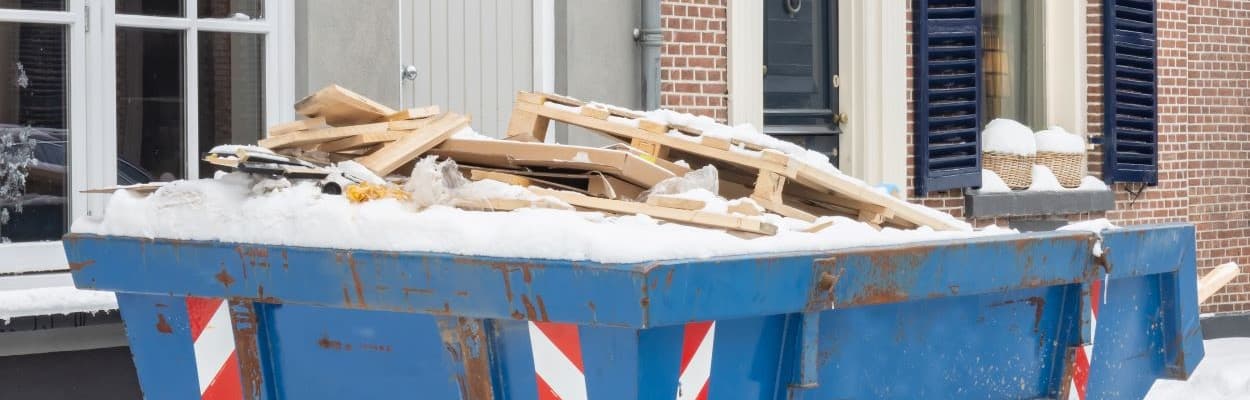
What if rain or snow falls into your skip?
29 november 2022 · Ruud Bats
There are lots of jobs you'd rather do in spring, but DIY carries on in the rainy autumn and cold winter months too. Think of getting your garden ready for winter, insulating your home or repairing the roof after a leak. Have you hired a skip for your waste in autumn or winter? Then you might be wondering what happens with rain or snow that falls into it. Is it OK for water to get into the skip? Won't the skip become too heavy, or will it affect how the waste is taken away? In this blog, you'll find the answers to all your questions about rain or snow in your skip, plus handy tips to prevent it.
Rain or snow in the skip: what now?
If you've hired a skip in autumn or winter, you often can't avoid rain or snow, and some of it will probably end up in the skip. That's nothing to worry about. Water can certainly get into the skip, but usually not very much, even if the skip is 4 weeks outside your door.
Will the skip become too heavy?
Weather conditions in the Netherlands are generally not so extreme that the skip will fill up completely with water, so it's unlikely to become too heavy as a result. There's no need to worry about an extra charge because of (too much) water in your skip. You pay a fixed price, so a few extra kilos make no difference. Even if you have a skip for garden tiles, it's still not a problem. If, for example, it rains extremely heavily and there's 5 cm of water in your 6m3 skip, that weighs about the same as roughly 8 gravel paving slabs.
What happens to the waste in the skip?
If you've hired a skip for wood waste or garden timber, the wood on top will get a bit wet. However, this has no effect on how the wood waste is taken away and recycled. If you hire a construction and demolition waste skip, a rubble skip or a skip for roofing waste, the waste won't get damp very quickly. If you have a skip for soil waste or mixed soil, the soil in the skip may get a bit heavier because it absorbs water. With a 3m3 skip that's not a problem, but if you have a 6m3 skip that's well filled, the lorry may struggle to lift it. With soil, it's therefore a good idea to protect it when it rains a lot.
Keeping water out of your skip
As you can see, it doesn't really matter if water gets into the skip. Even if the skip stands outside in the rain for a few weeks, not enough rain or snow will fall into it to make it too heavy. Still not keen on the idea? Then there are two things you can do to prevent it.
Place the skip under a canopy
Not everyone has this option, but if you have a canopy or carport where the skip can stand, have it placed there. That way the skip is sheltered from rain, snow and wind, and the waste stays dry.
Cover the skip with a tarpaulin
Not everyone can have their skip placed in a sheltered spot. If you'd still like to cover the skip, order a tarpaulin. You stretch it over the skip using rope. The tarpaulin has 2 advantages: no more rain or snow can get in, and neighbours are less likely to dump unwanted rubbish in your skip. Is your skip full and ready to be collected? Then be careful where you throw away the tarpaulin. If it's stretched over the skip, the waste processor will treat it as waste in the container. If you've ordered a container for construction and demolition waste, bulky waste or mixed garden waste, the tarpaulin can simply go in with it. If you've ordered a different container, throw the tarpaulin away in your wheelie bin for residual waste. Of course, you can also keep it for next time or reuse it. For example, you could use it to cover your garden furniture or turn it into a play tent for the kids.
More posts

24 February 2023 · Tips
10 tips to get ready for spring
Get ready for spring with our 10 handy tips. Read our blog for a comfortable spring and make the most of the season.
Continue reading

21 April 2020 · Tips
Fed up with staying indoors? Beat the corona boredom with these tips
Scrolled through Netflix ten times and played every board game? Here's how to beat the corona boredom.
Continue reading