- 9,1/104,5 out of 5 stars. See our reviews on Kiyoh (opens in a new window)
- Ordered in no time
- Fast delivery
- Sorted quickly

10 tips to get your garden ready for winter
12 november 2019 · Ruud Bats
Can't wait to enjoy your garden again in spring? Then it's wise to get started now. Have you been putting off getting your garden ready for winter too? Then get going! By preparing your garden for winter now, you'll make sure it looks beautiful again in spring.
Getting your garden ready for winter doesn't have to take much time. Pick a few nice autumn days, do only what's really necessary and spread the jobs over those days. Of course, you can also choose to set aside more time and tackle the whole garden. Think of demolishing a shed or building one, laying a new garden path, renovating wooden garden seating or putting up fences. It's entirely up to you!
It's best to get your garden ready for winter before the hard frosts set in. No time to lose! That's why we've put together seven tips to help you prepare your garden for the cold as well as possible.
#1 Remove annual plants
By now, annual plants will have finished flowering. You can pull them out of the ground, roots and all. Prefer not to have bare patches in your garden? Plant spring bulbs such as crocuses, daffodils, tulips and hyacinths. Winter heather and pansies are also ideal here if you'd like a bit more colour in the garden. You can easily get rid of the plants in a garden waste skip.
#2 Don't be too tidy
Withered, wilted flowers and plant remains aren't always bad for your garden. In fact, they're useful for small animals that eat them, hibernate in them or forage in them for food. Dead leaves also give flower beds good protection against frost. You don't need your whole garden covered in spent flowers, but a little mess in the garden is no bad thing at all. It only makes your garden livelier!
#3 Look after your lawn
Grass only grows when it's above six degrees, so don't mow it too short during these months. Around 4 centimetres is a good length. It's also a good idea to give the lawn a thorough feed at the end of the year. While leaves are good for protecting flower beds, it's wise to remove them from your lawn regularly. That way, the grass can 'breathe' properly and the light isn't blocked. Also, watch where you walk in winter. If there's snow on the grass or it's freezing, you can badly damage the blades of grass by walking over them.
#4 Help plants through the winter
Plants in pots are much more vulnerable in winter than plants in the ground. So use bubble wrap to protect the root balls from frost, or put all the pots together in a wooden crate. In that case, fill the inside of the crate with bubble wrap, straw or leaves as well. Some garden plants in the ground don't cope well with the cold either, such as agaves, standard roses and eucalyptus. These plants are best protected from wind and frost with bubble wrap, windbreak netting or horticultural fleece.
#5 Start pruning before the frost
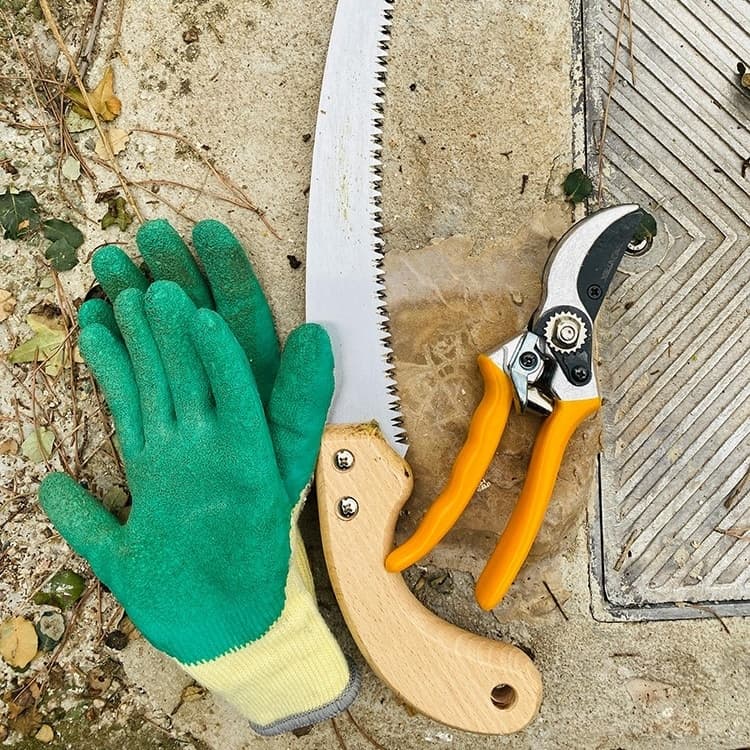
As long as it isn't freezing yet, you can still prune in winter. This is often an even better time than autumn, as the branches are easier to see when there are no leaves on them. When a tree or plant needs pruning varies by species. Box, birch, chestnut, walnut and maple trees should be pruned in autumn to prevent the pruning wounds from 'bleeding'. These species should be pruned while they still have their leaves. For large amounts of pruning waste, it's best to order a garden waste skip. These are available in the sizes 3m3, 6m3, 10m3 and 10m3 enclosed.
#6 Keep the pond clean
Do you have a pond in your garden? Stop too many leaves from ending up in it. Leaves can rot on the bottom, which affects the water quality. So stretch a net over the pond to catch them. Also remove dead plants from the water to prevent rotting
#7 Help the birds
Birds find it much harder to find food in winter. To help them, you can put a bird table or a fat ball in your garden. Some species won't come to these, so scatter some food on the ground as well. Good examples of bird food are bread crusts, seed mixes, nuts, fruit, peanuts and apples.
Jobs in the rest of the garden
Planning to tackle the whole garden this autumn? We've gathered a few more ideas for you here.
#8 Protect and repair wooden fences and furniture
Wooden fences, wooden furniture and wooden decking can be well protected against frost. Hardwood is best treated with wood oil twice a year (including in autumn). The oil protects the wood and keeps it in good condition. Wooden fences and decking need to stay well ventilated. The airflow helps keep them in good condition and protects against mould and woodworm. Keep shrubs and evergreen plants away from wooden garden furniture and fences. With wooden fences, it's also wise to remove weeds at the base to prevent rotting. Taking down or putting up a wooden fence, or dismantling and/or repairing wooden garden furniture? Order a wood skip. All kinds of wood can go in it, including painted, varnished and stained wood, untreated wood, pressed wood, chipboard, hardboard/softboard and wooden furniture.
#9 Protect your garden tiles
Garden tiles can get very slippery in winter. How slippery they get depends on the type of tile and the type of frost. With dry frost, patio tiles are less likely to become slippery.
Have the tiles become slippery? In most cases, you can spread salt. Just be careful with natural stone, as it can't withstand road salt. Most natural stone copes well with a layer of snow. The important thing is that no layer of water is left behind when it thaws, as this can freeze again and cause frost damage. Good drainage is recommended to prevent this.
If the weather is still nice in autumn, you could also choose to tackle all the paving in your garden. For this, ContainerOnline has rubble skips of 3m3, 6m3 and 12m3 available. In the rubble skip you can put stones, paving bricks, floor tiles, gravel tiles, roof tiles, concrete rubble, reinforced concrete (with metal), masonry rubble, paving rubble with (a maximum of 10%) sand, and hardened leftover concrete and mortar.
#10 Protect your shed from the frost
Small, poorly insulated spaces can be at risk in winter. For example, water pipes can burst because water expands when it freezes. In this case, you can use a frost protection heater to protect your garage, shed, summer house, cellar or storeroom from the cold. This heater spreads warmth throughout the space, protecting vulnerable spots such as water pipes from freezing. When the temperature drops below the set level, the heater switches on automatically.
Using the last fine days of the year to build a shed or demolish one? Then choose a construction and demolition skip. This is the ideal waste skip for a renovation. Various waste types can go together in the construction waste skip, such as wood, rubble, metal, concrete, plasterboard, insulation material, ceiling tiles and plastics.
Which waste skip should I hire?
When choosing a garden waste skip, you need to estimate how much waste you'll have. Need help? Our ContainerCheck will help you make the right choice. You're also welcome to give us a call and we'll gladly help you choose. Not sure? It's better to go for a larger skip hire, rather than ordering a second one afterwards. That works out cheaper.
Why hire a skip?
Why go for waste skip hire instead of just taking your waste to the recycling centre? Of course, a skip hireis a lot easier. We deliver the skip, you fill it and we take the waste away. It saves time, your car stays clean and you don’t need to hire a trailer. On top of that, the council tip will often only take a maximum of 1 cubic metre (or less) of construction waste. Does your council accept more construction waste? Then you’ll be charged for anything over the first cubic metre. Those charges often work out higher than the cost of hiring a skip. Less money and less hassle!
More posts

9 August 2021 · Garden
How to place a skip on your own property without damage
A skip on your own property? It's handy, but it can cause damage. Find out the best way to prevent it.
Continue reading