- 9,1/104,5 out of 5 stars. See our reviews on Kiyoh (opens in a new window)
- Ordered in no time
- Fast delivery
- Sorted quickly
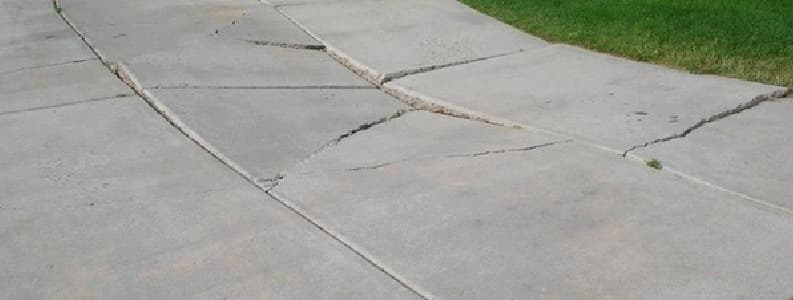
How to prevent damage to your paving
6 augustus 2021 · Ruud Bats
Damage is always a nuisance and something you want to avoid at all costs. A waste skip is very heavy, especially when it's filled with rubble, soil or heavy materials. If it's placed in the wrong spot, it can easily damage your paving. When you hire a skip, you don't want your expensive tiles or newly laid paving to get broken. With these tips you can reduce the risk of damage from a waste skip on your own property.
Your own property is always a risk
It's often handy to have the container on your own property, so you can get to it easily or so it doesn't bother the neighbours. And if the container is on your own property, you don't need the need a permit that some municipalities require. Even so, placing the container on your own property comes with a risk.
Ideally, a container is placed on municipal land. The municipality sets requirements for the paving and the surroundings. Private individuals are free to lay out their gardens however they like. That's why a waste skip on your own property is always at your own risk.
Damage to paving is impossible to predict
You can't tell from above whether a tile is 4 cm or 8 cm thick. Nor can you see whether it's laid on sand or soil, or whether the ground has been properly compacted or rolled. This makes it difficult to tell whether the paving can bear the weight of a container.
An empty 6 m3 rubble skip easily weighs more than 500 kilos on its own. Soil weighs between 1.600 and 2.000 kilos, depending on how wet it is. If we take an average of 1.800 kilos per m3, the container weighs 6 x 1.800 + 500 = 11.300 kilos. Imagine that weight pressing down on beautiful 4 or 5 cm thick tiles laid on soil. If the paving is perfectly level and the weight in the container is evenly distributed, it might well be fine, but if one tile sits slightly higher or isn't quite straight, there's a real chance it will break.
The weight point shifts during collection
On top of that, once the container is full it also has to be collected. This is done with a large, heavy skip loader lorry. If the weight is very high, the lorry can't lift it without help, so stabilisers are put out. These are a kind of leg at the back of the lorry that provide extra support. Even if the container is placed perfectly where it can't cause any damage, there's a chance a stabiliser will land right on a weaker section of paving, which then takes a huge amount of weight.
Heavy container
Do you have a skip for garden tiles or other heavy waste, such as soil, rubble or heavy materials, ideally have it placed on municipal land (do check whether you need a permit). It might mean walking a little further, but it could well protect your paving.
On your own property
If you want the container on your own property, only have it placed where the ground is suitable. Ideally on thick paving slabs (preferably 7 or 8 cm), laid on a sand base, as level as possible and with kerbs around the paving. Or have it placed somewhere that is easy to repair, such as sand, soil or grass.
Spread the load evenly
If a lot of weight is on 1 side, that side becomes heavier and presses harder on the paving. This can cause the slabs or bricks to break in exactly that spot.
Support legs may be needed
Bear in mind that stabilisers (support legs) may be needed when the container is collected. Make sure there is enough room for the lorry and the stabilisers. Also keep in mind that the stabilisers may not have enough grip on soft ground, so the lorry might have to stand somewhere else to lift the container.
Talk to the driver
Ask the driver delivering the container for advice. Explain clearly what you want and what will go into the container. If the driver has an idea of roughly how heavy the container will get, they can judge where a good spot is and where any stabilisers will go.
Allow for swinging
The container is set down and lifted using chains. It may swing back and forth a little and could touch the paving with its corner first. If you have slabs that scratch or dent easily, you can put a sheet of wood underneath, for example.
More posts
9 August 2021 · Garden
How to place a skip on your own property without damage
A skip on your own property? It's handy, but it can cause damage. Find out the best way to prevent it.
Continue reading