- 9,1/104,5 out of 5 stars. See our reviews on Kiyoh (opens in a new window)
- Ordered in no time
- Fast delivery
- Sorted quickly
All about waste wood
13 mei 2019 · Ruud Bats
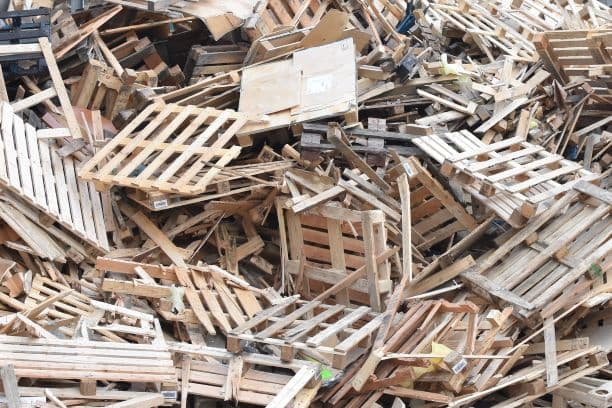
Have you got building work planned? Or do you have plans to finally knock down that old shed? Then there’s a good chance it will produce a lot of waste wood. Small amounts of waste wood are easy to get rid of, but large quantities can’t simply be thrown out with your regular household waste. The solution is wood skip hire. But be aware: waste wood can vary considerably in quality, which means it can’t all be collected together. That’s why we’ve put together an overview of everything you need to know about waste wood below.
Where does waste wood come from?
Waste wood is produced by building, renovating, refurbishing or demolishing buildings, among other things. It is often collected as a separate waste stream because it can be easily reused or recycled. So it would be a shame not to separate waste wood from the rest of your construction waste. When it comes to collecting waste wood, there are three types of wood.
Different types of wood
Waste wood is divided into three categories. A-wood is unprocessed, untreated, unvarnished and non-impregnated waste wood. This type of wood is of good quality and can be easily recycled. It is often in such good condition that it can be reused straight away without recycling. For example, you could make a new piece of furniture out of it yourself – pallets are especially popular for this. On small private building projects, A-wood usually only turns up in small amounts.
B-grade wood is the most common waste type. It includes hardboard, chipboard, fibreboard, pressed wood, furniture, painted, varnished and glued wood, doors, window frames and non-impregnated wood. A lot of waste wood is categorised as B-wood.
C-grade wood is impregnated wood that has been treated with certain substances to extend its lifespan. Think of fences (Wolmanised, i.e. pressure-treated) or railway sleepers (tarred), for example. C-wood is the least environmentally friendly type of wood and is processed differently from A-wood and B-wood.
Collection
Wood waste is collected in large-volume waste skips. There are standard all-in rates for a 3m3 skip, 6m3 skip and a 10m3 skip. Lots of different types of wood can go in these skips. In fact, all A-wood and B-wood can be collected in them. This includes plywood, laminated wood and furniture, as long as it has no upholstery. Nails, screws and bolts up to 10mm can simply be left in. What is not allowed in the wood skip is C-wood (chemically treated wood), rotten or burnt wood, material that looks like asbestos, branches, tree trunks, roots and other waste such as glass, bulky waste or garden waste. Do you have a lot of C-wood that needs to be removed? Get in contact with us and we will find a suitable solution.
Recycling
The different categories of wood waste are all about how it is recycled. A-wood can be reused straight away, but when it can no longer be reused in its original form, it can also be shredded and made into new wood products, such as pallets or chipboard.
In many cases, B-wood can be recycled into new wood products just as well as A-wood. First, contaminants such as screws or nails are removed, then the wood is shredded. The chips are pressed together under high pressure to make chipboard. When B-wood is no longer in good condition, it is used as fuel for power stations. Turning B-wood into biogas is less sustainable than recycling it into chipboard, but it does save valuable fossil fuels. On top of that, every tonne of wood used as biomass saves around 75 kg of CO2 emissions.
C-wood cannot be recycled into new wood. Depending on the substances used, it is either destroyed or used as fuel for power stations. While B-wood is mostly burnt in the Netherlands, C-wood is transported to Germany and Sweden, where the facilities meet the environmental requirements for burning treated wood. Never burn impregnated wood yourself! It can release harmful substances that are dangerous to people and the environment.
More posts
10 March 2026 · Waste types
Why hiring a waste skip is good for the environment
Skip hire. Waste has a bad reputation, but when you handle it responsibly, it's actually good for society. So go ahead and renovate!
Continue reading