- 9,1/104,5 out of 5 stars. See our reviews on Kiyoh (opens in a new window)
- Ordered in no time
- Fast delivery
- Sorted quickly
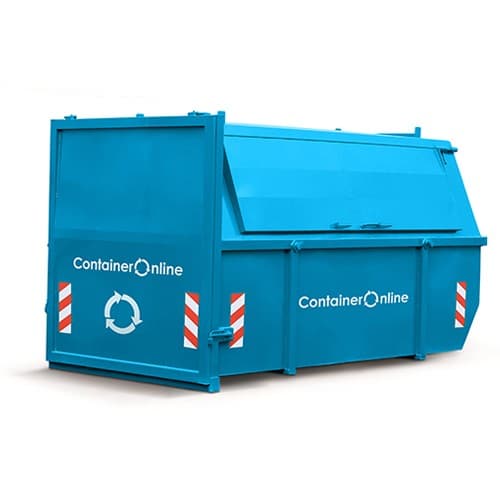
Hiring an enclosed (lockable) skip?
13 december 2024 · Marketing
The benefits of an enclosed skip
Several factors come into play when choosing between an open or enclosed skip. An enclosed skip offers a range of benefits that make your project safer, more efficient and more environmentally friendly. Below we discuss the main benefits and features.
Why choose an enclosed skip?
An enclosed skip offers extra security and protection. These are the main considerations:
- Security:An enclosed skip prevents unwanted access to your waste. This is especially important for sensitive projects or in areas where security is a concern.
- Protection from the weather:On long-term projects, an enclosed skip protects your waste from rain, wind and other weather conditions. This keeps your waste tidy and helps you avoid complications.
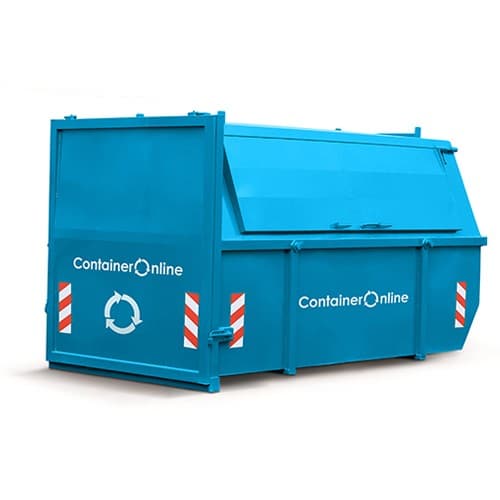
How is an enclosed skip laid out?
An enclosed skip combines ease of use with optimal security. Its design is geared towards efficient waste management:
- Rear: One or two doors for loading large items of waste, such as planks or furniture.
- Sides: Usually fitted with hatches at chest height, ideal for smaller waste such as packaging material or residual waste.
This layout makes it easy to separate waste and store it efficiently, while keeping the contents secure.
Standard layout of a closed container:
- Left side: Two openings with small doors.
- Right side: Two openings with small doors.
- Rear: One or two walk-in doors.
1. Preventing illegal dumping
An open container runs the risk of other people dumping unwanted waste in it. This can lead to:
- Filling up faster: Less space for your own waste.
- Extra costs: Unwanted waste can contaminate your waste stream, for example chemical waste in a container meant for clean rubble. This often leads to extra costs when the container is emptied.
A closed container can be locked, which makes illegal dumping virtually impossible. It also helps to place the container somewhere clearly visible so you can keep an eye on it.

2. Preventing theft of waste
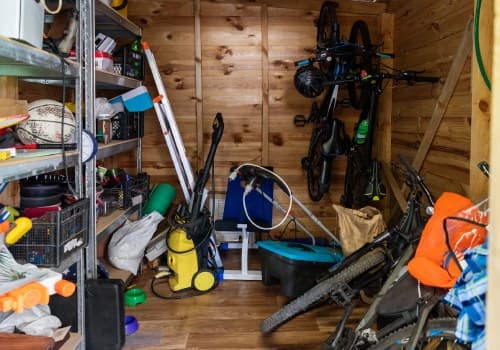
For sensitive projects, such as clearing out old household items or commercially sensitive material, a closed container offers extra discretion. It stops curious passers-by from taking things, protecting both your privacy and the tidiness of your work area.
3. Stopping waste from blowing away
Open containers are vulnerable in strong winds. Light waste, such as plastic or polystyrene, can blow away and litter streets, gardens or even cars. This is not only a nuisance but can also cause road accidents. With a closed container, all your waste stays neatly in place, whatever the weather.
Choose certainty and convenience
A closed container is a safe and practical solution for waste management. It prevents unwanted situations and helps your project run smoothly. Whether you are working on a large building job or a smaller renovation, a closed container is the reliable choice.
Contact us for advice and find out which closed container best suits your project!
Which closed (covered) container do you need?
Choosing the right closed container depends on the amount of waste you expect. Closed containers are available in various sizes, ranging from 10 to 40 cubic metres. Below is a short explanation of the most commonly used sizes:
What can go in a closed container?
When hiring a closed container, it is important to know that the permitted waste streams depend on the type of container you order. Specific rules apply to each waste stream, so choosing the right container for your project is essential.
Why is this important?
Putting the wrong waste in a container can lead to extra costs or even rejection at the waste processing facility. For example, if you put hazardous waste such as asbestos or chemicals in a container that is not intended for it, this can cause environmental problems and result in fines.
How do you hire a closed container?
Hiring a closed container is easy and offers a practical solution for your waste management. Follow these steps to make the right choice:
1. Choose the right size
Closed containers are available in various sizes, depending on your project:
- 10m³: Suitable for smaller projects, such as home renovations or gardening work.
- 20m³: Ideal for medium-sized projects, such as building alterations or large-scale clear-outs.
- 40m³: Perfect for large construction projects or long-term waste disposal.
Choose a size that matches the amount of waste you expect, so you don't run out of space or pay for capacity you don't use.
2. Check permit requirements
If you place a closed container on your own property, you usually don't need a permit. But will the container be placed on a public road or in a car park? Then check with your local council whether you need to apply for a permit. This way you avoid fines and unnecessary delays.
3. Plan delivery and collection
Waste companies offer flexible delivery and collection options. This means you can have the container delivered at a time that suits you best. As soon as the container is full or your project is finished, you can book a collection. By planning clearly in advance, you ensure efficient waste disposal without interruptions.
Practical, safe and efficient
Hiring a closed skip is the ideal way to dispose of your waste safely and tidily. With the right size, a permit where needed and a clear schedule, you can focus entirely on your project. Get in touch with us and find out which closed skip best suits your needs!
What are the benefits of a closed skip?
A closed skip offers plenty of benefits for efficient waste management. It protects the waste from the weather, such as rain and wind, prevents fly-tipping and improves safety because unauthorised people can't get to it. A closed skip also keeps things private, as the contents can't be seen, and stops waste from blowing about, which helps keep the work area neat and clean. And because waste is kept separate and protected, a closed skip also supports sustainable waste management and recycling. That makes it a versatile and reliable choice for all kinds of projects.
What can go in a closed container?
What you can put in a closed skip depends on the type of skip you choose. This can include construction and demolition waste, wood, metal, plastic, rubble or green waste. Hazardous substances such as asbestos and chemical waste are not allowed. Check with the hire company beforehand so you know for sure which materials can go in the skip, and avoid extra charges for putting in the wrong waste.
How much space does a closed skip take up?
The space needed depends on the size of the skip. A 20m³ skip, for example, takes up two parking spaces. For smaller projects, a 10m3 skip may be enough.
Closed skip hire at Containeronline
At Containeronline you can hire a closed skip quickly and easily. With a wide range of sizes and competitive prices, Containeronline offers a reliable and affordable way to dispose of your waste safely. Whether you're working on a small job or a large project, we'll help you choose the right size and make sure delivery is quick and hassle-free.
Need a closed skip straight away? Visit Containeronline to book your skip today. Got questions about hiring a closed skip? Our team is ready to advise and help you!
Conclusion
A closed skip offers plenty of benefits for safe and efficient waste disposal. Whether it's a small project or a large-scale job, a closed skip protects your waste from the weather, prevents fly-tipping and keeps things private. It also helps you keep your work area neat and organised. By choosing a closed skip, you're also contributing to sustainable waste management, as waste streams are often carefully sorted and recycled. A practical and responsible choice for any job!
More posts
29 June 2026 · Renovating
How long a waste skip can stay
Got a job that takes one day, or a few weeks or months? Here's how long a waste skip can stay. After this period, you pay a rental charge.
Continue reading
11 May 2026 · Renovating
6 tips to avoid extra costs
Skip hire comes at a fixed price, but extra costs can still crop up. That's a waste of money and easy to avoid. Read our 6 best tips.
Continue reading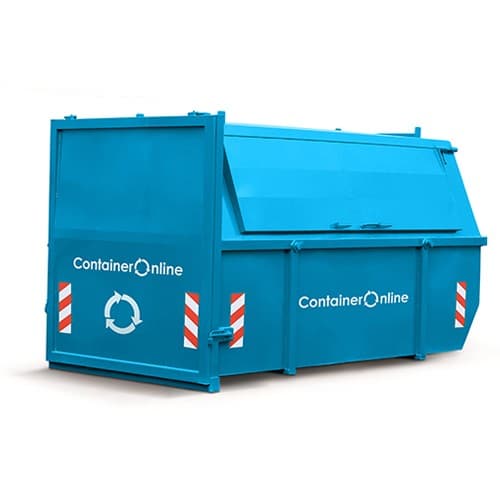
1 May 2026 · Containers
Rubble skip vs construction waste skip: what's the difference?
When renovating or demolishing, the question soon arises: should you choose a rubble skip or a construction waste skip?
Continue reading