- 9,1/104,5 out of 5 stars. See our reviews on Kiyoh (opens in a new window)
- Ordered in no time
- Fast delivery
- Sorted quickly
Decluttering: how do you do it?
3 november 2022 · Ruud Bats
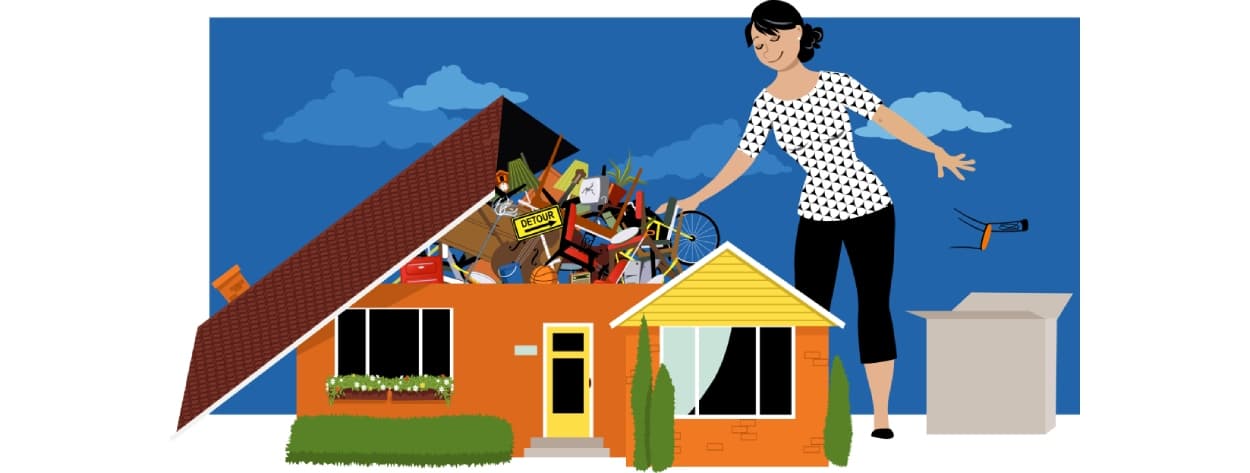
Decluttering is becoming more and more popular, and that's no surprise. When you start tidying your home, you often discover you have lots of things you never use. Unnecessary stuff quickly leads to a cluttered home and a cluttered mind. Decluttering and minimalism bring a sense of calm. On top of that, decluttering is also good for the environment. Things you no longer use can be recycled into new raw materials, from which new products are made. Decluttering also makes you more aware of the things you own, so you're less likely to buy new ones.
Decluttering: a tidy home, a tidy mind
Throwing things away might feel wasteful. While tidying your home, you come across all sorts of things you no longer use. You paid for them, and materials went into making them, only for them to end up in the container. So they often go back into a box or cupboard, 'just in case'. The next time you tidy up, there they are again. Things gathering dust unused in a cupboard – now that's the real waste. Especially when you think about how much you pay in mortgage or rent, and that a fair chunk of that expensive space is taken up by things you don't use. If you donate or throw them away, they can be reused, you create more space in your home, and you end up with a tidy house and a clear head. Decluttering and throwing things away is actually really good for you and for the environment.
How do you tackle decluttering?
Decluttering properly can seem like a big task. Maybe you've been putting it off for a while. Then it's time to make a start. If you're really dreading it, start small. Once you've tidied a small area, you'll be left with a good, organised feeling. You'll find you enjoy it more and more.
Make a plan
Before you start throwing things away at random, it's a good idea to make a plan. Structure makes decluttering much clearer, easier and more fun. Divide your home into a number of areas that you can declutter within a set time. Be realistic: split rooms with a lot to tidy into several areas. In the kitchen, for example, do 2 cupboards at a time. Tackle the areas one by one. Start with the places you use most. For example, go from the living room to the kitchen and then on to the bedrooms. It helps to plan when you'll do each room.
Choosing what to keep
Once you've made a plan, stick to it. Pick up every item you come across in your area, even if you think you want to keep it. That way, you're less likely to overlook anything. Each time, ask yourself why you have it, whether it makes you happy and how you'd feel if it were gone or broken. A good question is: 'If it were gone or broken, would I buy it again straight away?' If the answer is no, it can almost always go. Another smart approach is to focus not on which things can go, but on which ones you want to keep.
Sorting
While you're deciding which things can go, stick to just that. First decide everything you want to get rid of, and only then start sorting. It's handy to keep a box next to you to put everything you're decluttering into. Once you're done, you can decide whether to take it to a charity shop, for example, or whether you'd rather hire a household goods skip.
Make it easy
Once you know what can go, the next job is deciding how it goes. You'll find that a lot of things can actually go. Put boxes somewhere out of the way, for example, and label each box with whether it's for the charity shop, to sell or for the bin. You can then take these boxes away as you go. If you don't have the space or don't fancy driving back and forth, it's handy to have a container or Big Bag outside your door. You can throw everything that needs to go straight in and it's gone. We'll collect it when you're finished and make sure it gets recycled. A good container or Big Bag for decluttering is one for bulky waste.
Make it fun
Take your time – you don't have to do it all in 1 day. That way it stays fun. If you have a container or Big Bag for the things you're throwing away, put them straight in. A container can stay free of rental charges for 4 weeks. It can stay longer, but then a small rental charge applies. A Big Bag is sent by post and collected whenever you like, so it can stay as long as you want.
Tip: turn it into a game. For example, challenge yourself to put 3 things in the container every day, or have everyone in the family throw away 1 thing each day. Especially if you're doing it with other family members or housemates, you can keep a scoreboard. You could agree, for instance, that anyone who skips a day puts a euro in a jar, and the winner gets the jar at the end.
Container finder
Not sure exactly which container you need? Find out in just a few clicks.
Popular containers
These containers are popular with other customers:
More posts
1 October 2021 · Recycling
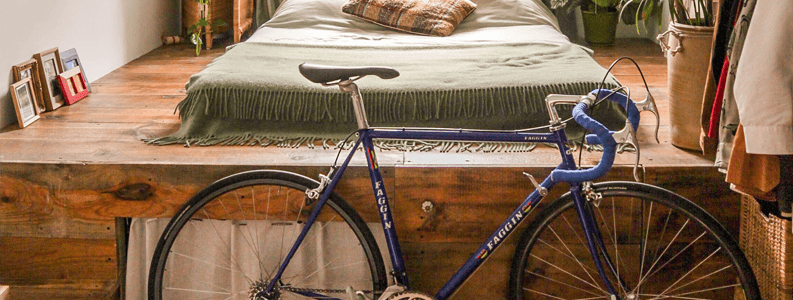
Cycling on mattresses and sleeping on artificial grass
Mattresses are so easy to recycle that you could end up cycling on an old mattress, or find one under a playground.
Continue reading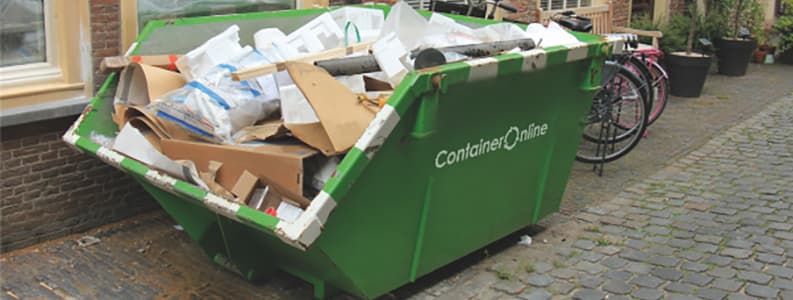
29 June 2026 · Renovating
How long a waste skip can stay
Got a job that takes one day, or a few weeks or months? Here's how long a waste skip can stay. After this period, you pay a rental charge.
Continue reading
11 May 2026 · Renovating
6 tips to avoid extra costs
Skip hire comes at a fixed price, but extra costs can still crop up. That's a waste of money and easy to avoid. Read our 6 best tips.
Continue reading