- 9,1/104,5 out of 5 stars. See our reviews on Kiyoh (opens in a new window)
- Ordered in no time
- Fast delivery
- Sorted quickly
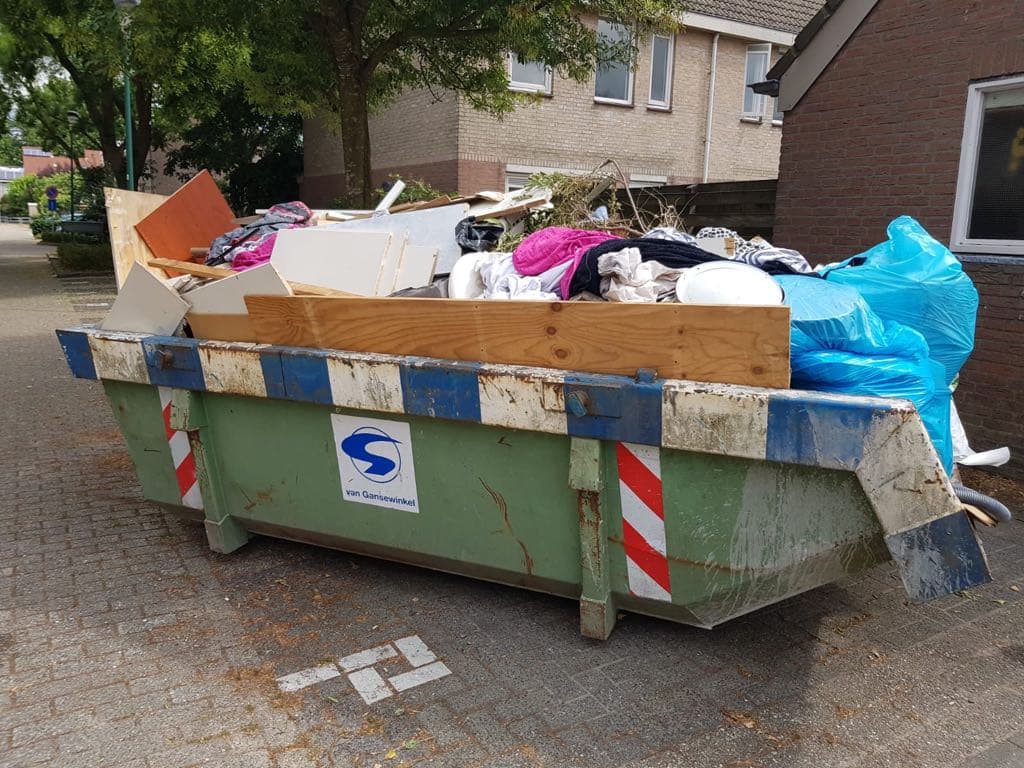
4 tips for loading a skip
20 februari 2019 · Ruud Bats
Waste is waste and it needs to go as quickly as possible. It may seem a bit over the top, but collecting skips is subject to strict rules. To make sure we're never unable to collect a skip because it has been loaded incorrectly, here are a few tips on how to do it right.
Tip 1: Only put the type of waste in the skip that you hired it for
At ContainerOnline you can hire a skip for almost every waste type. Keep this in mind when disposing of your waste, as you're not allowed to put in any waste types other than the one the skip is intended for. For example, you can't put wood or plasterboard in a rubble skip. In that case, choose a construction and demolition waste skip instead, as it takes almost all types of waste produced during a renovation. Click here for more information on which waste types are allowed in each skip.
Tip 2: Don't let the load stick out
Some types of waste aren't the handiest shape and can easily stick out of the skip. Try to break these materials down before putting them in the skip. If that isn't possible, place them as low and as flat as possible in the skip. The risk of items sticking up at an angle increases if the skip is loaded unevenly.
Tip 3: Make sure the waste doesn't stick out more than 20cm above the edge
Our hauliers drive the waste skips on the motorway. To make sure not only the drivers but also other road users get home safely, the skip is covered with a net so that no waste can blow or fall out. If the waste is packed firmly into the skip, you may fill it up to a maximum of 20 cm above the edge.
Tip 4: Prevent the load from shifting or falling out of the skip
Some waste types are easier to load stably than others. Try to place the waste in the skip as stably as possible and make sure it doesn't stick out too far. This stops the waste from sliding around during transport, which could create dangerous situations for other road users.
More posts
29 June 2026 · Renovating
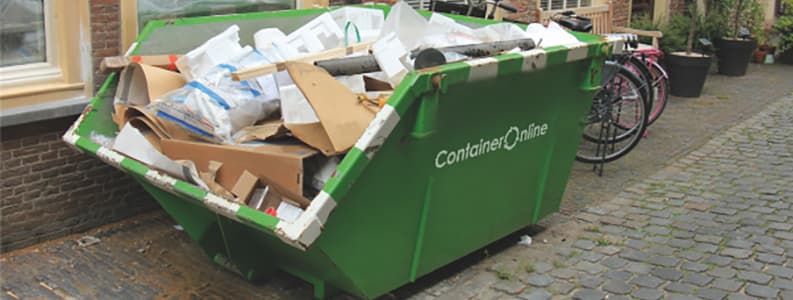
How long a waste skip can stay
Got a job that takes one day, or a few weeks or months? Here's how long a waste skip can stay. After this period, you pay a rental charge.
Continue reading
11 May 2026 · Renovating
6 tips to avoid extra costs
Skip hire comes at a fixed price, but extra costs can still crop up. That's a waste of money and easy to avoid. Read our 6 best tips.
Continue reading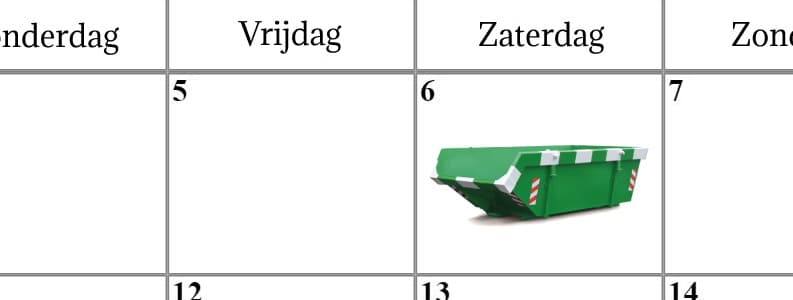
2 April 2021 · Renovating
Waste skip on a Saturday?
Want a waste skip delivered on a Saturday? How does it work, and is it even possible? What should you keep in mind if you're planning a weekend DIY job?
Continue reading