- 9,1/104,5 out of 5 stars. See our reviews on Kiyoh (opens in a new window)
- Ordered in no time
- Fast delivery
- Sorted quickly
Removing rubble: how is rubble recycled?
3 november 2020 · Ruud Bats
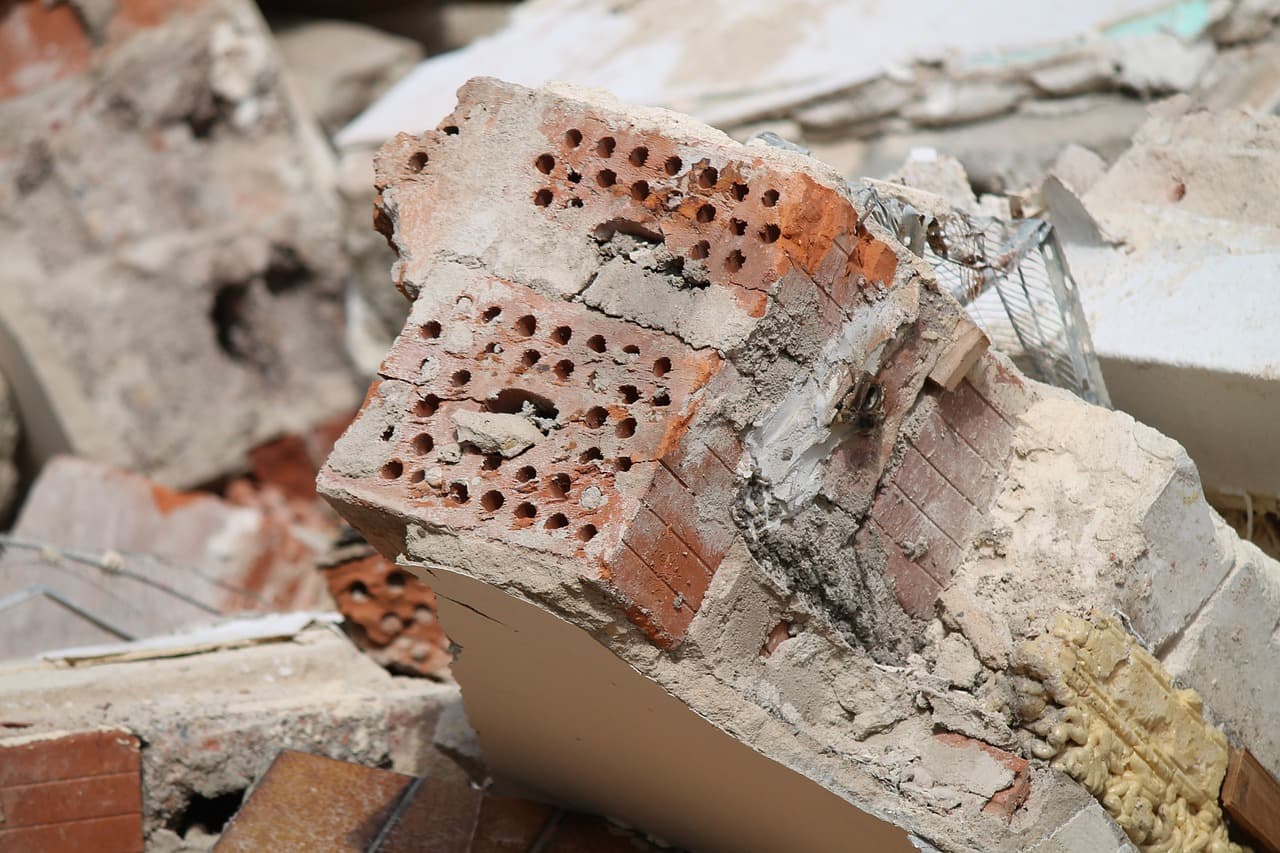
Bathroom tiles, bricks, loose chunks of stone, roof tiles, pavement and patio slabs, gravel tiles, masonry rubble and concrete: all of this falls under the waste type clean rubble. This waste is mostly produced during demolition work and, when collected separately, can be recycled very effectively.
Separating rubble waste
Clean rubble is not separated any further after collection. As a result, processing costs for rubble are lower than for other waste types, which makes the rubble skip one of the cheapest skips available. A rubble skip 6m3 is only a few tenners more than a 3m3. The condition, however, is that only clean rubble goes into the skip. No plaster products and no rubble bags.
What is allowed in a rubble skip?
Stones, garden tiles, wall and floor tiles, gravel tiles, roof tiles, concrete rubble, reinforced concrete, masonry rubble, paving rubble (with a maximum of 10% sand), hardened leftover concrete and mortar are all allowed in the rubble skip. Hazardous waste, asbestos-containing material, construction and demolition waste, plaster products, plastering rubble, aerated concrete, asphalt concrete, plastic, paper and wood are not allowed in a rubble skip.
How is rubble collected?
Rubble is collected in construction skips of 3m3, 6m3 and 12m3. A 10m3 waste skip, which you see used for many other waste types, is not suitable, because the skip becomes too heavy when it is completely filled with rubble. A 12m3 can be filled with rubble, even though it is a larger skip. This is because a different lorry can be used for it. This lorry has a hook arm, which allows it to lift more weight. Rubble can also be collected in a 1m3 Big Bag.
How is rubble recycled?
Once collected, rubble is not sorted any further and goes straight to the recycling plant. There, the rubble is crushed and separated into various fractions. The granulate left over after crushing makes a good building material. It can be used on its own or mixed with other materials. Among other things, this building material is used as foundation material in construction projects, for building roads and for raising dykes. Recycling rubble is important for conserving raw materials such as gravel. By recycling and hire a skip and rubble, less gravel needs to be mined.
More posts
29 June 2026 · Renovating
How long a waste skip can stay
Got a job that takes one day, or a few weeks or months? Here's how long a waste skip can stay. After this period, you pay a rental charge.
Continue reading
11 May 2026 · Renovating
6 tips to avoid extra costs
Skip hire comes at a fixed price, but extra costs can still crop up. That's a waste of money and easy to avoid. Read our 6 best tips.
Continue reading
2 April 2021 · Renovating
Waste skip on a Saturday?
Want a waste skip delivered on a Saturday? How does it work, and is it even possible? What should you keep in mind if you're planning a weekend DIY job?
Continue reading